
NSE's Diverse Ownership Structure: A Glimpse into India's Financial Backbone as of March 2025
Published: 2025-07-04 00:43 IST | Category: Markets | By Flash Finance desk (written with AI assistance) · Editor: Kokila
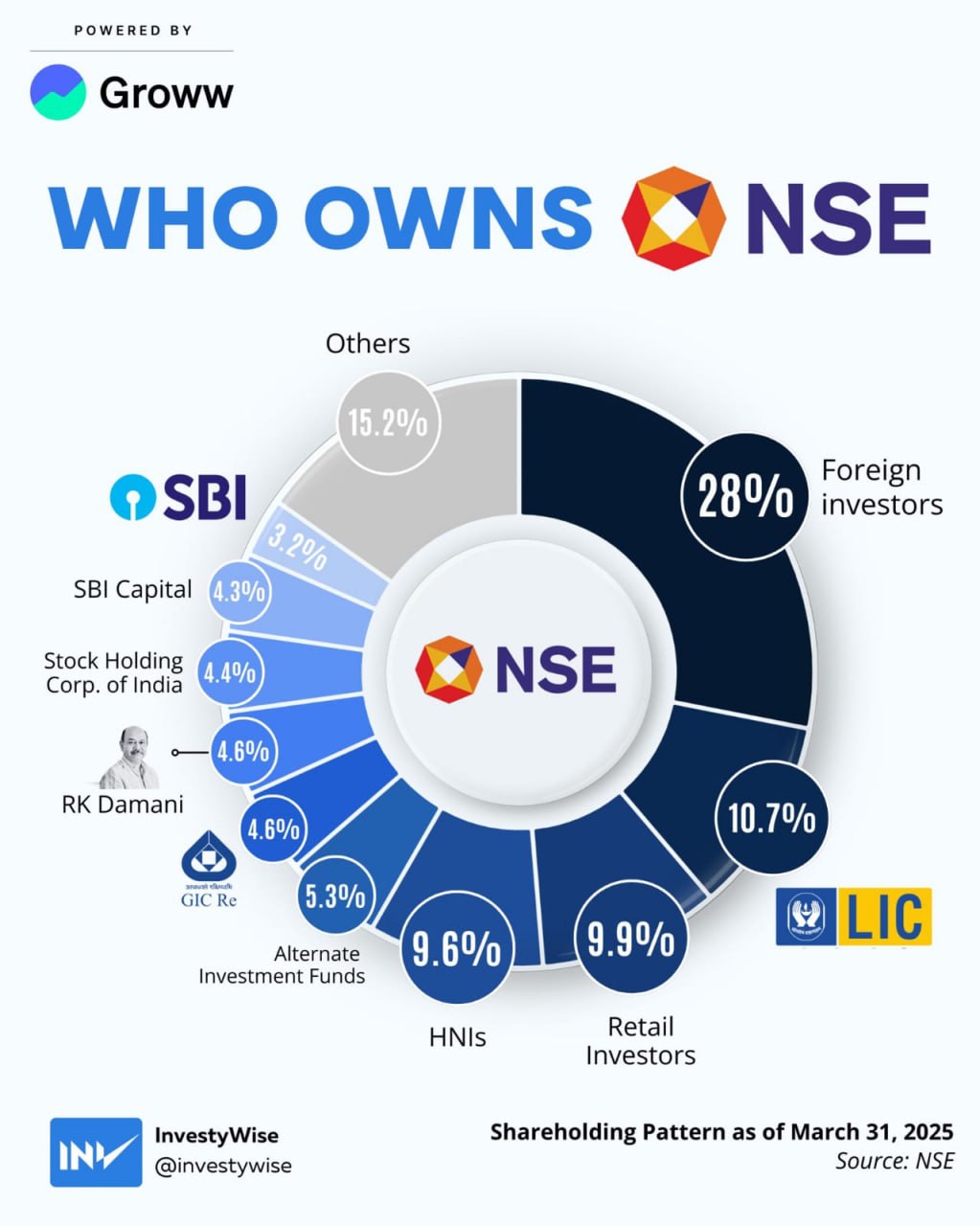
The National Stock Exchange (NSE) of India, a key pillar of the nation's financial infrastructure, presents a comprehensive and diverse shareholding pattern as of March 31, 2025. This forward-looking data, corroborated by official sources, offers valuable insights into the broad-based ownership that underpins one of the world's largest and most active stock exchanges.
Key Shareholding Insights:
The data highlights a balanced distribution of ownership, featuring significant stakes from both Indian and foreign entities, alongside substantial participation from retail and high net-worth investors.
- Foreign Investors: A notable 28% of the NSE is held by foreign investors, underscoring the increasing global confidence and interest in India's burgeoning capital markets. This substantial foreign ownership reflects the attractiveness of the Indian growth story and the NSE's integral role in facilitating international capital flows into the country.
- Life Insurance Corporation (LIC): As a significant domestic institutional investor, the Life Insurance Corporation of India (LIC) holds a substantial 10.7% stake in the NSE. This highlights the deep involvement of India's state-owned financial institutions in the country's core market infrastructure.
- Retail and HNI Participation: Retail investors collectively hold 9.9%, while High Net-worth Individuals (HNIs) account for 9.6% of the ownership. This significant public participation is a testament to the growing financial literacy and direct engagement of Indian citizens in the country's economic progress.
- Domestic Institutions: Several other prominent Indian institutions hold considerable stakes:
- Alternate Investment Funds (AIFs) hold 5.3%.
- Veteran investor R.K. Damani holds 4.6%.
- General Insurance Corporation of India (GIC Re) also holds 4.6%.
- Stock Holding Corporation of India contributes 4.4%.
- SBI Capital holds 4.3%.
- State Bank of India (SBI) holds 3.2%.
- Other diverse entities constitute the remaining 15.2% of the ownership.
Context and Significance for the Indian Market:
Established in 1992 with the objective of bringing transparency to the Indian equity markets, the NSE has grown to become the 5th largest stock exchange globally by total market capitalization, exceeding $5 trillion as of May 2024. It holds the distinction of being the world's largest derivatives exchange by the number of contracts traded and the third largest in cash equities by the number of trades for the calendar year 2023.
The diversified ownership pattern of the NSE is crucial for its stability and independence. The presence of major domestic financial institutions ensures that the exchange remains aligned with national economic objectives, while foreign investment brings global best practices and capital. The notable share of retail and HNI investors reinforces the democratisation of financial participation in India.
Despite its strong market position and robust ownership structure, the much-anticipated Initial Public Offering (IPO) of the NSE remains pending, with regulatory hurdles having delayed its listing. However, the current shareholding pattern provides a transparent view of the exchange's foundational strength, reflecting a broad consensus among key stakeholders on its strategic importance to India's financial future. The continued growth and increasing sophistication of the Indian capital markets, largely facilitated by the NSE, position the exchange as a vital engine for the nation's economic aspirations.
