
Unpacking NSE's Ownership: A Glimpse into Who Holds the Reins of India's Premier Exchange
Published: 2025-07-04 00:48 IST | Category: Markets | By Flash Finance desk (written with AI assistance) · Editor: Kokila
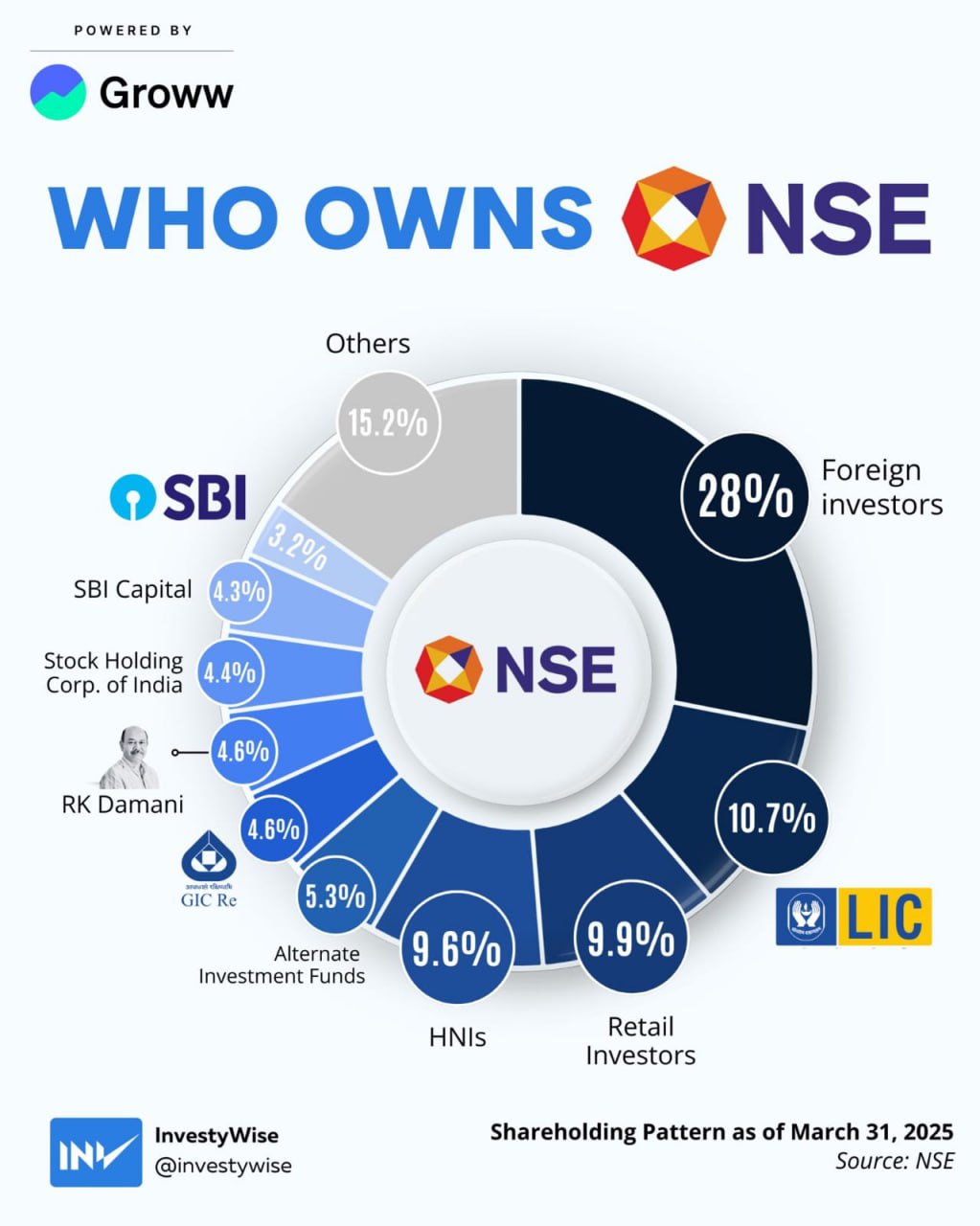
The National Stock Exchange of India (NSE), which stands as the world's largest derivatives exchange by contracts traded and the fifth largest stock exchange globally by total market capitalization, has unveiled its shareholding structure as of March 31, 2025. The detailed breakdown offers insights into the diverse set of entities and individuals who collectively own this vital Indian financial infrastructure.
Key Shareholding Insights:
The ownership landscape of NSE is broadly distributed, reflecting both domestic and international confidence in India's capital markets.
- Foreign Investors: A substantial 28% of the NSE is held by foreign investors. This significant stake highlights the increasing global interest and confidence in the Indian economy and its financial markets.
- Life Insurance Corporation (LIC): India's largest insurer, LIC, holds a notable 10.7% stake in the NSE. This positions LIC as a key domestic institutional shareholder, emphasizing the role of public sector financial entities in the nation's market infrastructure.
- Retail Investors: Individual retail investors collectively account for 9.9% of the NSE's ownership. This growing participation underscores the democratisation of wealth creation opportunities and the increasing engagement of the common Indian citizen in the financial ecosystem.
- High-Net-Worth Individuals (HNIs): HNIs hold 9.6% of the exchange, indicating substantial investment from affluent individuals who see strategic value in the NSE.
- Alternate Investment Funds: These funds collectively own 5.3% of the NSE, showcasing the role of pooled investment vehicles in the exchange's capital structure.
- General Insurance Corporation of India (GIC Re): The state-owned reinsurance company holds 4.6% of the NSE.
- RK Damani: The veteran investor RK Damani holds a 4.6% share, marking a significant individual stake in the exchange.
- Stock Holding Corporation of India: This entity holds 4.4% of the NSE.
- SBI Capital: A subsidiary of the State Bank of India, SBI Capital, holds 4.3%.
- State Bank of India (SBI): India's largest public sector bank, SBI, directly holds 3.2% of the NSE.
- Others: The remaining 15.2% is distributed among various other shareholders.
Strategic Implications for India:
The diversified ownership pattern of the NSE is crucial for its stability and independence. The significant holdings by domestic public sector entities like LIC, SBI, and GIC Re ensure a strong Indian institutional backing for the exchange. Concurrently, the substantial foreign investor presence brings in global capital and expertise, fostering international best practices and market development.
The growing share of retail investors and HNIs indicates a maturing domestic investor base, which is vital for the long-term health and liquidity of the Indian capital markets. This broad ownership base also aligns with the NSE's foundational objective of fostering transparency and efficiency in the Indian equity markets, a mandate it has pursued since its incorporation in 1992.
While discussions around a potential NSE Initial Public Offering (IPO) have been ongoing, the latest information indicates that the exchange's application to SEBI for a 'no objection certificate' was still pending as of May 27, 2025. This ongoing process underscores the regulatory scrutiny and strategic importance associated with any public listing of such a critical market infrastructure.
The NSE continues to demonstrate robust financial performance, with its audited results for the fiscal year ending March 31, 2025, showing significant growth in revenue and profit after tax, driven by increased trading volumes and investor participation. This strong performance, combined with its diverse and strategic ownership, positions the NSE firmly as a pivotal institution driving India's economic growth and financial market development.