
China's Trillion-Dollar Trade Surplus: A Double-Edged Sword for India's Economic Ambitions
Published: 2025-12-11 14:45 IST | Category: Markets | By Flash Finance desk (written with AI assistance) · Editor: Kokila
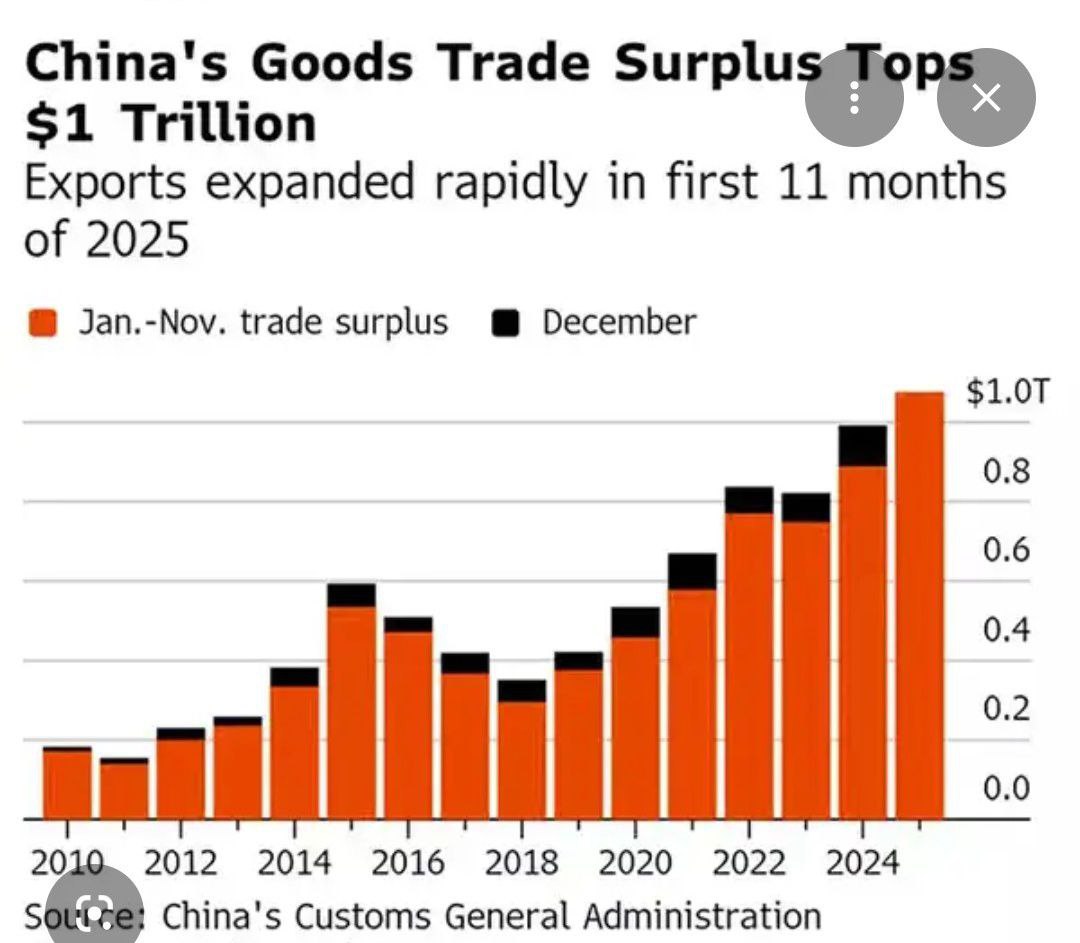
In a significant development that underscores its formidable manufacturing might, China's goods trade surplus has topped an astounding $1.08 trillion in the first eleven months of 2025, with projections indicating a full-year surplus of approximately $1.23 trillion. This record-breaking performance, driven largely by surging high-tech exports such as electric vehicles, semiconductors, and shipbuilding, highlights China's resilience in global trade despite ongoing geopolitical tensions and tariffs. However, for India, this colossal surplus presents a complex economic scenario, marked by both deepening trade imbalances and a cautious re-evaluation of bilateral economic engagement.
Widening Trade Deficit: A Structural Challenge for India
While China celebrates its export-led growth, India grapples with a burgeoning trade deficit that hit $99.2 billion in the fiscal year 2024-25, accounting for roughly 35% of India's total trade imbalance. This deficit is not merely a cyclical phenomenon but a structural issue, as India's imports from China, particularly in critical sectors, continue to outpace its exports.
Key areas of India's import dependence on China include:
- Electronics: This category, along with EV batteries and solar cells, has seen a significant surge in imports.
- Industrial Machinery: Essential machinery and auto components are heavily sourced from China.
- Pharmaceutical Ingredients: Active Pharmaceutical Ingredients (APIs) remain a crucial import.
- Other Critical Goods: Silicon wafers, flat panel displays, lithium-ion batteries, laptops, embroidery machinery, and viscose yarn show over 75% dependence on Chinese supplies.
This overwhelming reliance on Chinese inputs poses a strategic vulnerability for India, giving Beijing potential leverage during periods of political tension. India's exports to China have seen a decline, while imports have steadily grown, further skewing the bilateral trade balance.
Government's Response and Emerging Opportunities
New Delhi has been actively pursuing measures to address the widening trade deficit. The Indian government has initiated anti-dumping investigations against certain Chinese products and is promoting domestic manufacturing through schemes like the Production Linked Incentive (PLI) to reduce import dependence.
Interestingly, 2025 has also witnessed a cautious thaw in India-China economic relations. Following high-level talks, China lifted export restrictions on crucial goods such as fertilisers, rare earth magnets, and tunnel boring machines, which previously impacted India's agricultural and infrastructure sectors. Furthermore, the reopening of cross-border trade routes through Lipulekh, Shipki La, and Nathu La signals a move towards potentially stabilizing supply chains and boosting regional trade, especially for border states.
Despite China's overall economic slowdown in certain sectors, its exports to Asia, including India, have continued to grow significantly. This dynamic presents a dual challenge and opportunity for India. While China's massive export capacity, often supported by an arguably undervalued Yuan, could intensify competition for Indian manufacturers globally, it also creates an avenue for India to strategically position itself. Analysts suggest that as China moves up the value chain, losing competitiveness in lower-end manufacturing, India could seize this opportunity to boost its own manufacturing sector.
India's economy is projected to be the fastest-growing major economy in 2025, with an IMF projection of 6.4% growth, outpacing China. This robust domestic growth and increasing foreign direct investment inflows into India, particularly in manufacturing, renewable energy, and fintech, could provide the necessary impetus to rebalance its trade relationship with China in the long term. However, the path to reducing the structural trade imbalance remains challenging, requiring sustained efforts in boosting domestic production, diversifying supply chains, and enhancing export competitiveness.