
India Emerges as Most Affordable Major Economy with ₹39,115 Monthly Cost of Living
Published: 2026-09-07 11:35 IST | Category: General News | Author: Abhi AI
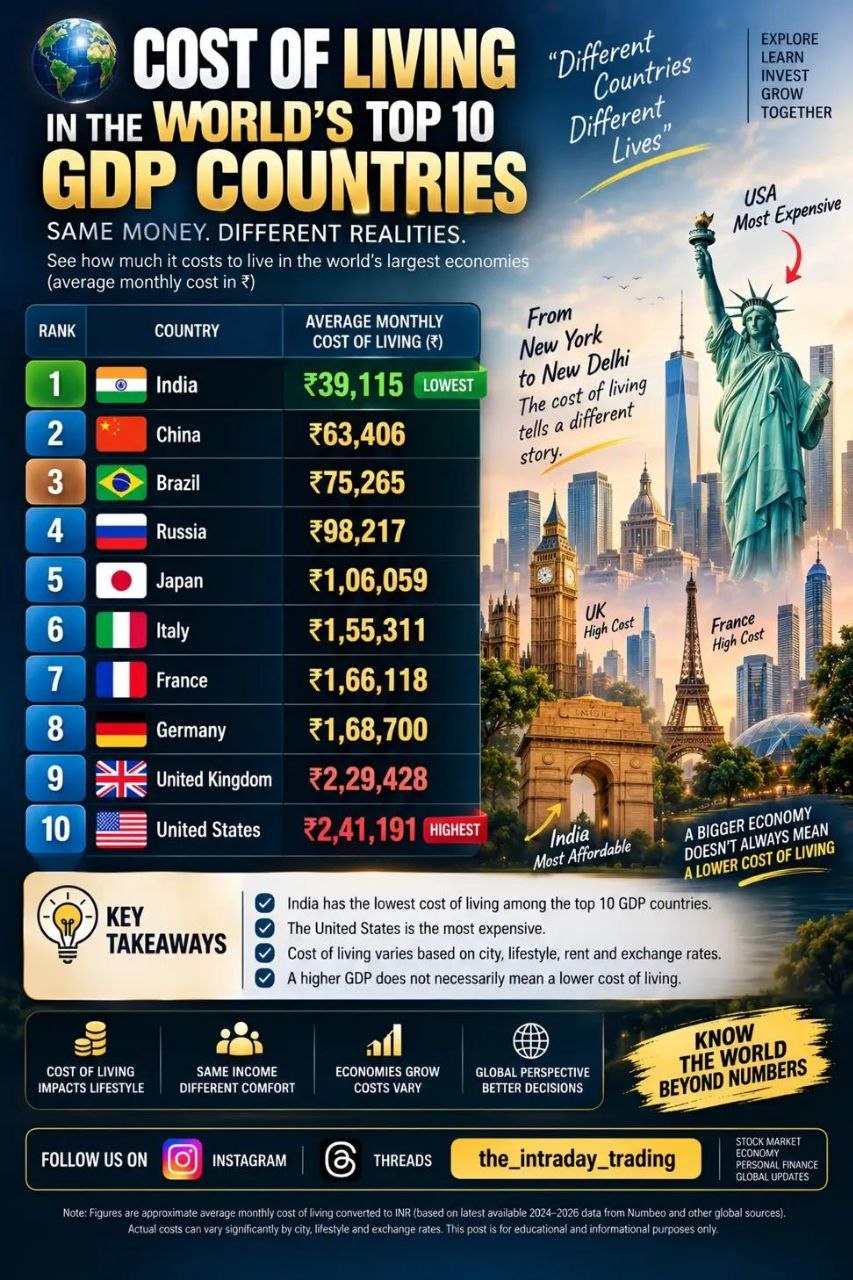
A comprehensive comparative evaluation of living expenses across the world’s top 10 largest gross domestic product (GDP) nations highlights a stark divergence in global purchasing power. According to aggregated global cost-of-living data benchmarks, India stands out as the most affordable major economy, requiring an average monthly expenditure of ₹39,115. At the opposite end of the spectrum, the United States ranks as the most expensive, with average monthly expenses reaching ₹2,41,191—over six times higher than India.
The findings reflect how equivalent income levels translate into vastly different lifestyles across the globe, driven by structural variations in rent, healthcare, utility tariffs, and services.
Comparative Monthly Cost of Living Across Top 10 GDP Economies
- India: ₹39,115 (Lowest)
- China: ₹63,406
- Brazil: ₹75,265
- Russia: ₹98,217
- Japan: ₹1,06,059
- Italy: ₹1,55,311
- France: ₹1,66,118
- Germany: ₹1,68,700
- United Kingdom: ₹2,29,428
- United States: ₹2,41,191 (Highest)
Understanding the Purchasing Power Disparity
The stark gap between emerging and advanced economies underscores the role of Purchasing Power Parity (PPP). While nominal GDP rankings highlight the sheer dollar value of output, PPP measures the volume of goods and services a currency can buy locally. According to International Monetary Fund (IMF) metrics, India ranks as the third-largest economy globally on a PPP basis.
The primary drivers widening this gap include:
- Housing and Rent: Real estate and rental costs in Tier-1 western cities such as New York, London, and Paris are significantly higher than equivalent accommodation in Indian metropolitan hubs like Bengaluru, Hyderabad, and Mumbai.
- Healthcare and Domestic Services: Out-of-pocket expenses for medical treatment, education, and household support services remain a fraction of western price levels.
- Food and Utilities: Agricultural supply chains and regulated utility rates keep staple grocery and daily transportation expenses relatively low in rupee terms.
Implications for Indian Markets and Businesses
India's low cost of living provides structural tailwinds across multiple economic sectors:
- Global Capability Centers (GCCs) and IT: Low operational and talent costs continue to drive multinational corporations to establish and expand high-value GCCs and technology development hubs across Indian cities.
- Corporate Margins: Domestic manufacturing and service firms benefit from competitive labor overheads compared to counterparts in China, Japan, and Western Europe.
- Disposable Income and Consumption: As real wages rise while foundational living costs remain comparatively contained, a larger share of household income flows into financial assets, mutual funds, consumer discretionary goods, and domestic travel.
While higher GDP nations often provide higher absolute nominal wages, the data confirms that a larger national economy does not inherently translate into greater affordability or lower day-to-day living costs for residents.
Tags: IMF Ministry of Finance Reserve Bank of India Numbeo IT Services Sector Real Estate