
Income Tax Vigilance 2024: 10 High-Value Transactions That Could Trigger a Tax Notice
Published: 2026-08-20 12:10 IST | Category: Markets | By Flash Finance desk (written with AI assistance) · Editor: Kokila
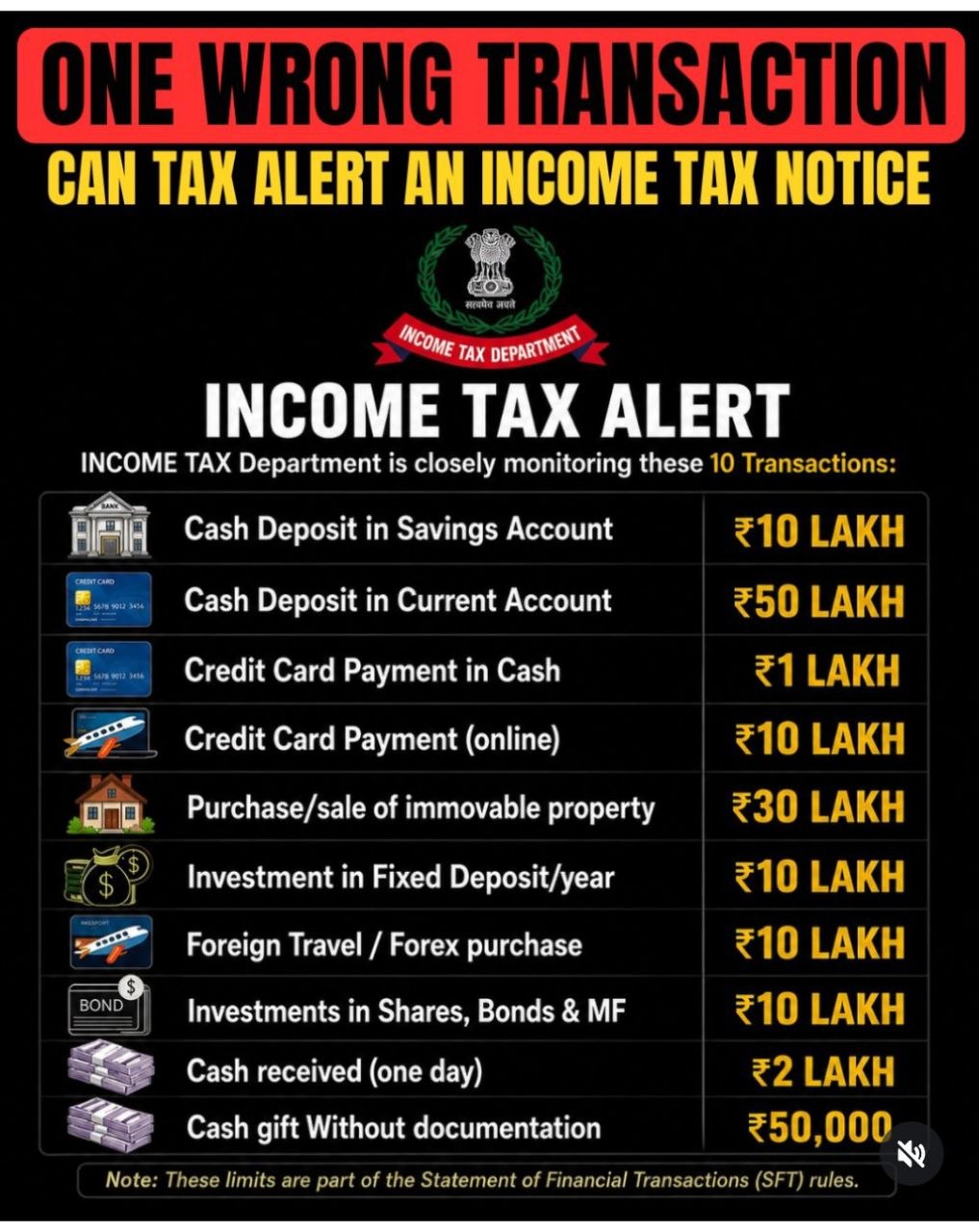
The Income Tax Department of India has significantly ramped up its monitoring of financial activities through the Statement of Financial Transactions (SFT). With the implementation of the Annual Information Statement (AIS) and the integration of PAN-linked data across banks and financial institutions, every major transaction is now under the scanner. Taxpayers who engage in high-value transactions that are disproportionate to their declared income are increasingly receiving automated notices for clarification.
The 10 Critical SFT Thresholds for Indian Taxpayers
Banks, mutual fund houses, and registrars are legally mandated to report transactions that cross specific limits. Understanding these triggers is essential for every taxpayer to ensure compliance and avoid the dreaded tax notice.
- Cash Deposits in Savings Accounts: If the aggregate cash deposits in one or more savings accounts of an individual exceed ₹10 lakh in a financial year, the bank must report this to the tax authorities.
- Cash Deposits in Current Accounts: For business owners and professionals, the threshold for cash deposits or withdrawals in current accounts is set at ₹50 lakh per year.
- Credit Card Payments (Cash): Paying credit card bills using cash is highly discouraged. Any cash payment towards credit card dues exceeding ₹1 lakh in a year is flagged.
- Credit Card Payments (Online/Digital): Even digital payments are monitored. If your total credit card spending (settled via online modes) exceeds ₹10 lakh in a year, it is reported under SFT.
- Purchase or Sale of Immovable Property: The Registrar of Properties reports any transaction involving immovable property valued at ₹30 lakh or more (based on stamp duty value or actual transaction value).
- Investments in Fixed Deposits: Fresh investments in bank or post office fixed deposits (excluding renewals) totaling ₹10 lakh or more in a year are reportable.
- Foreign Travel and Forex Purchases: Spending ₹10 lakh or more on foreign exchange or overseas travel expenses in a financial year is a major trigger for reporting.
- Shares, Bonds, and Mutual Funds: Investing ₹10 lakh or more in equity, bonds, debentures, or mutual fund units within a financial year is considered a high-value transaction.
- Daily Cash Receipts: Under Section 269ST, receiving cash of ₹2 lakh or more from a person in a single day, for a single transaction, or in respect of a single event is prohibited and carries heavy penalties.
- Cash Gifts: While gifts from specified relatives are exempt, any cash gift from non-relatives exceeding ₹50,000 in a year is fully taxable as "Income from Other Sources."
The Role of AIS and Form 26AS
The Income Tax Department uses these SFT reports to populate a taxpayer's Annual Information Statement (AIS). This document provides a comprehensive view of all financial activities linked to your PAN. Before filing an Income Tax Return (ITR), it is now mandatory for taxpayers to reconcile their records with the AIS. Any mismatch between the transactions reported in the AIS and the income declared in the ITR is a primary cause for scrutiny notices under Section 143(2) or Section 142(1).
Actionable Advice for Taxpayers
To stay on the right side of the law, Indian taxpayers should follow these best practices:
Maintain Detailed Documentation: * Keep records of the source of funds for all large transactions, especially cash deposits and property purchases. * Ensure gift deeds are executed for high-value gifts received from relatives to establish the relationship and genuineness of the transfer.
Regularly Monitor the Compliance Portal: * Log in to the e-filing portal periodically to check for "High-Value Transaction" alerts or "e-Campaign" notifications. * If a transaction in your AIS is incorrect (e.g., a joint account transaction attributed solely to you), use the feedback feature to correct it immediately.
Avoid Prohibited Cash Transactions: * Adhere strictly to the ₹2 lakh limit for receiving cash under Section 269ST. Violations can lead to a penalty equal to 100% of the cash received. * Prefer digital modes or cheques for credit card payments and investments to maintain a clear audit trail.
Failure to explain the source of high-value transactions can result in the income being treated as "unexplained" under Section 68, which attracts a steep tax rate of 60% plus applicable surcharges and cess. By staying informed of these SFT limits, taxpayers can ensure a smooth, notice-free filing season.
