
Bhavish Aggarwal Pledges Ola Electric Stake and Backs 17% Debt to Fund Rs 1,000 Crore Rights Issue
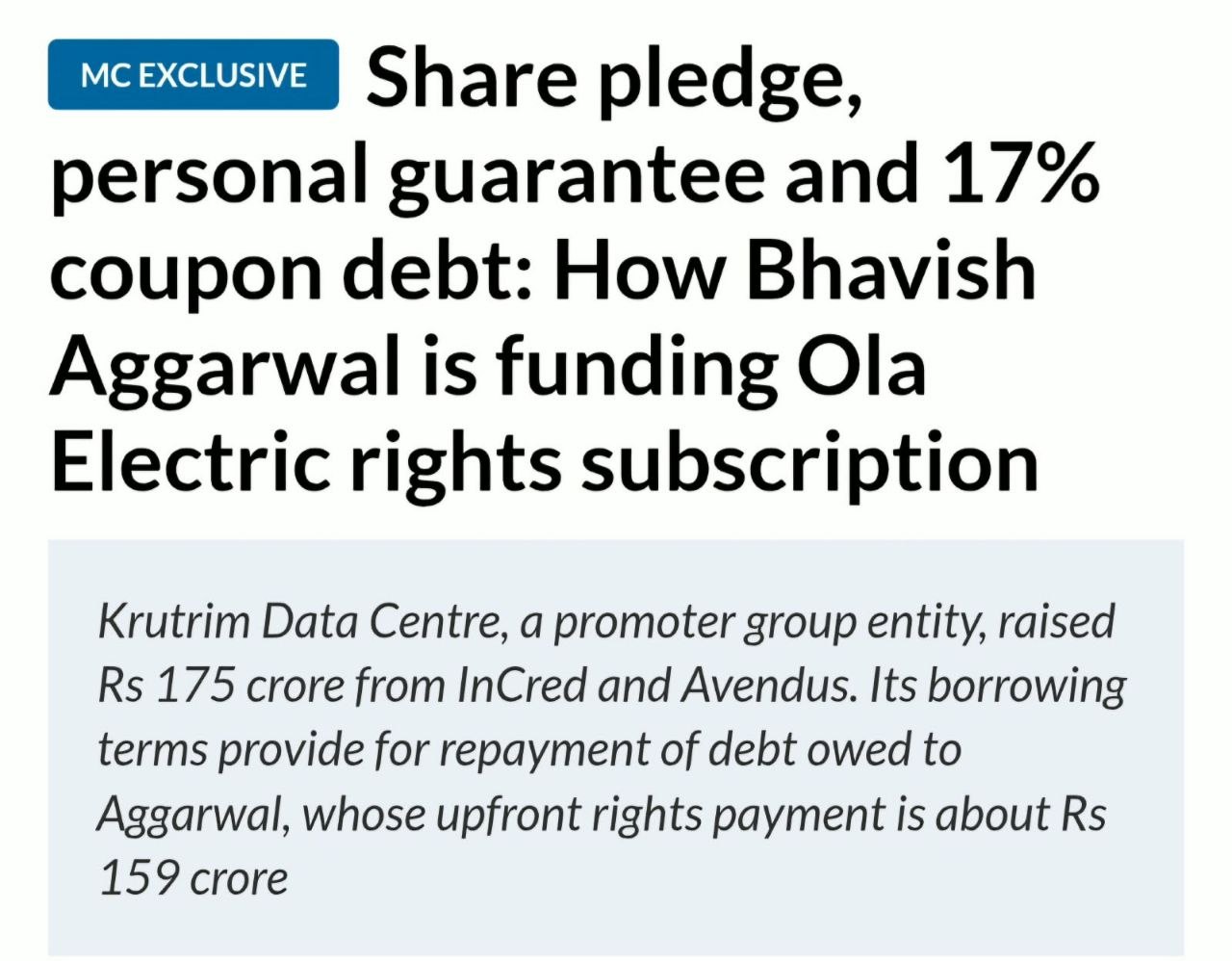
Ola Electric Mobility founder and Chairman Bhavish Aggarwal has turned to high-yield private credit to finance his participation in the electric vehicle (EV) maker’s Rs 1,000-crore rights issue. Krutrim Data Centre Private Limited, a promoter group entity owned by Aggarwal, raised Rs 175 crore through non-convertible debentures (NCDs) carrying an interest rate of approximately 17.15%, according to regulatory filings and debt disclosures.
The borrowing terms enable Krutrim Data Centre to repay loans owed directly to Aggarwal, creating liquidity for him to fund an upfront rights subscription payment estimated at Rs 159 crore. However, securing the credit facility required Aggarwal to pledge 20 crore shares of Ola Electric in favour of CTL Trusteeship Limited—representing 4.32% of the listed company's total equity and roughly 16.3% of his personal shareholding—alongside offering a personal guarantee.
Key Details of the Financing Structure:
- Issuing Entity: Krutrim Data Centre Private Limited, a non-operative promoter group entity separate from the core cloud and AI business, Krutrim SI Designs.
- Debt Amount and Investors: Rs 175 crore raised across 1,750 NCDs (face value Rs 10 lakh each), comprising Rs 150 crore from InCred Special Opportunities Fund I and Rs 25 crore from Avendus Finance.
- Coupon and Security: An interest coupon of 17.15%, secured by a personal guarantee from Aggarwal and 20 crore pledged shares of Ola Electric Mobility.
- Intended End-Use: Liquidity channeled to Aggarwal to finance his rights entitlement without liquidating his personal equity in the open market.
The Reversal on Promoter Pledges
The reappearance of encumbrances on promoter holdings comes less than ten months after Aggarwal declared that Ola Electric should operate completely free of share pledges. In December 2025, Aggarwal monetised a small portion of his equity to repay approximately Rs 260 crore of promoter debt, releasing an encumbrance over 17.3 crore shares (3.93% of equity).
At the time, the management emphasised that eliminating the pledge removed an overhang of volatility and structural risk from the listed firm. The new pledge of 20 crore shares is even larger than the previous encumbrance, making it Aggarwal's biggest single collateral pledge to date.
Ola Electric clarified in its regulatory filings under SEBI’s Substantial Acquisition of Shares and Takeovers (SAST) regulations that the pledge was created solely to fund the rights subscription, no shares are being sold in the transaction, and Aggarwal currently has no other pledges against his securities.
Context of Ola Electric’s Rights Issue
The funding comes as Ola Electric executes a Rs 1,000-crore rights issue through partly paid-up equity shares, approved by its board in late September. The rights offering is strategically structured to strengthen the firm’s balance sheet following a challenging operational stretch marked by intensifying EV two-wheeler competition from legacy incumbents like TVS Motor and Bajaj Auto, as well as rival pure-play Ather Energy.
According to the draft offer documents, the issue proceeds are earmarked for specific operational milestones:
- Debt Reduction: Approximately Rs 350 crore allocated toward prepayment or repayment of existing corporate borrowings.
- Expansion Initiatives: Rs 400 crore directed to organic capital expenditure and growth programs.
- Working Capital and Corporate Needs: The residual proceeds deployed toward general corporate purposes and issue costs.
Aggarwal directly holds about 26.5% of Ola Electric, while the wider promoter group controls nearly 33%. By subscribing fully to his entitlement, Aggarwal ensures the promoter bloc avoids equity dilution as fresh capital enters the firm.
Market Implications for Indian Investors
While institutional and retail investors generally view a promoter putting personal capital into a rights issue as a signal of high conviction, the financing mechanics introduce critical trade-offs:
- Cost of Capital: A 17% debt coupon reflects the elevated yield demanded by private credit funds for promoter-level structured mezzanine risk, underscoring that traditional banking credit remains tight for holding-level leverage.
- Margin Call Sensitivity: Pledging listed equity creates structural vulnerability. If secondary market prices experience severe drawdowns, margin trigger covenants could pressure promoters to provide additional collateral or face liquidation risk.
- Governance Overhang: The route of raising debt inside an unlisted data centre promoter vehicle to upstream capital into the listed two-wheeler OEM will keep corporate governance desks and market watchers attentive to related-party capital flows.
